Picture yourself hovering over a galaxy map, cursor drifting between star systems, unsure whether to explore alone or with others. Many space game players face this choice as the genre expands. Single-player titles like Mass Effect or Outer Wilds offer crafted stories at your pace, while multiplayer games such as Elite Dangerous or No Man’s Sky emphasise shared discovery. Neither is better. This comparison looks at storytelling, social play, and practical factors to help you decide what fits your current mood.
Why Single-Player Space Games Feel More Immersive
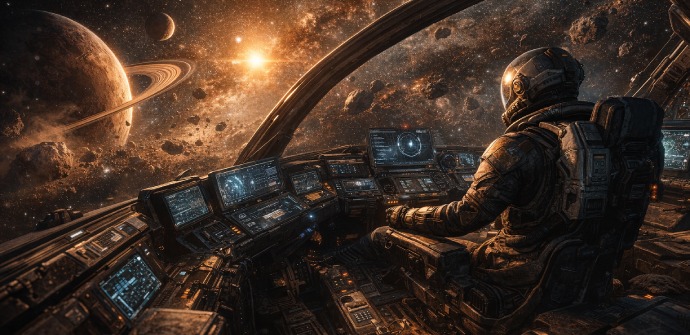
There’s something almost meditative about exploring a galaxy entirely on your own terms. No one rushing you, no voice chat cutting through the silence, just you and the stars. That kind of focused solitude is exactly what makes solo space games hit differently.
Titles like Mass Effect and Outer Wilds are built around the idea that your experience belongs to you. Mass Effect gives you a branching narrative where your choices shape the story over three games. Outer Wilds drops you into a solar system with no hand-holding and trusts you to piece together its mysteries at your own pace. Both games create a sense of personal investment that’s genuinely hard to replicate when other players are involved.
Pacing matters here. You can pause mid-mission to read a codex entry, reload a save to try a different approach, or spend an hour just drifting through asteroid fields. That kind of control over your own experience builds immersion in ways that live multiplayer simply can’t match.
Many players also prefer single-player for practical reasons. Online environments can be unpredictable, and there’s no denying that toxicity is a real issue in competitive gaming communities. Solo play offers consistency, privacy, and a story that doesn’t depend on anyone else showing up.
Where Multiplayer Space Games Add Energy and Unpredictability
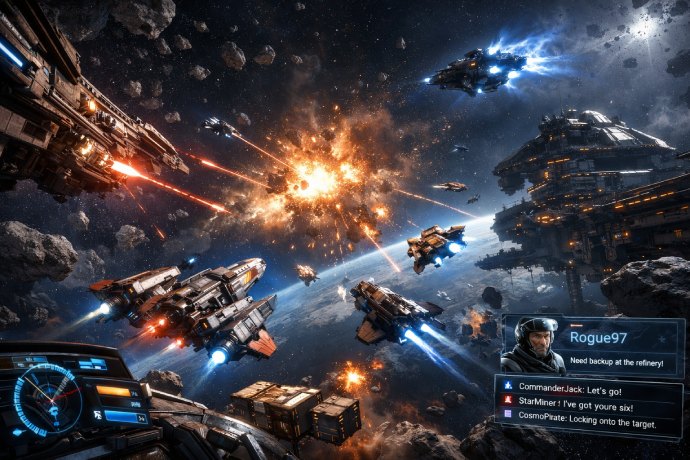
There’s something a scripted campaign simply can’t replicate: the moment a stranger warps into your mining operation and you have no idea whether they’re there to trade or to raid. That unpredictability is the core appeal of multiplayer space games, and for many players, it never gets old.
Games like Elite Dangerous and Eve Online have built entire economies and political systems driven by real player decisions. Alliances form, wars break out, and markets shift based on what thousands of people choose to do each day. No developer scripted that. It just happens.
Teaming up adds another layer. Running coordinated missions with friends, splitting roles across a crew, or pulling off a faction heist with a guild creates moments that feel genuinely earned. Social features like these are a big reason live-service games keep players around far longer than single-player titles typically do.
That said, multiplayer comes with friction. Scheduling four friends for a session is harder than it sounds. Griefing is real, balance patches can upend your favorite playstyle overnight, and if the servers go down, your whole experience disappears with them. Some players find that exhausting. It’s easy to see why others find it thrilling.
The Best Choice Depends on How You Like to Play
No differentiation in quality; it is true that this preference sets the two modes of play apart. A single-player experience rewards you with narrative depth, total control over pacing and an ability to stop your whole game in-between possibilities. In contrast, multiplayer titles provide you opportunities for shared unpredictability to develop, create emergent rivalries, and bring forth moments that no scripted story can ever truly reproduce. These formats have their very special limitations about their value ratings for various tastes, as some users can flitter between them depending on the mood or general schedule. If one needs a quiet evening, then story-driven simulations (Outer Wilds) will be wonderful, and if other players require a cooperative play session for the weekend, space games like Elite Dangerous would again make it. Loyalties fluctuate for these people as to what they want from their nightly times in space.