Space simulation games thrive on delivering a sense of realism that captivates players with immersive gameplay. A key component driving this realism is the accurate depiction and use of physics, particularly how gravity is implemented and understood within the game’s universe. Traditional views of gravity as a force are being reconsidered in modern physics, which drastically impacts how space simulators model physics to create believable experiences for players.
Understanding Gravity Beyond Newtonian Physics
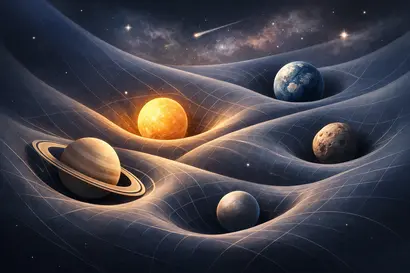
Contrary to the common Newtonian perspective that treats gravity as a force pulling objects together, modern physics explains gravity as the effect of curved spacetime. This means gravity is not a force but rather an illusion arising from the straight-line paths objects follow through a warped spacetime fabric around massive bodies like planets or stars.
Einstein’s general theory of relativity reveals that objects in free fall—such as astronauts orbiting Earth—are actually inertial observers moving along geodesics or the “straightest possible” paths in curved spacetime. They experience weightlessness, not because gravity is absent, but because they are following these geodesics without any acceleration forcing them off these paths.
Implications for Space Simulator Gameplay
This modern understanding profoundly influences how space simulators approach physics engines and gameplay mechanics. Players piloting spacecraft or exploring environments in these games often experience motion and gravity in ways that mirror real inertial frames and curved spacetime effects, creating a more convincing sensation of weightlessness and orbital dynamics.
For example, spacecraft coasting in deep space at a constant velocity feel weightless, with objects inside drifting without any force acting upon them. When entering the gravitational influence of a planet, the craft’s trajectory curves—not because it is pulled by a force, but because it continues along a geodesic through curved spacetime. Accurately simulating this behavior requires sophisticated physics models beyond simple force calculations, making the games feel much more authentic.
Balancing Realism and Gameplay Accessibility
While implementing general relativity-inspired mechanics adds realism, game developers also balance complexity with playability. Players benefit from nuanced motion models where acceleration, inertia, and gravity interact realistically without overwhelming them with calculations that would detract from fun.
Many space games incorporate such physics by simulating inertial frames, applying forces only when thrusters activate and portraying weightlessness when coasting. This aligns with the fact that standing on a planet’s surface is equivalent to accelerating upward at 9.8 meters per second squared, a key insight from relativity that helps explain the player’s experience of gravity in-game.
Enhancing Player Immersion Through Physics
Strong integration of physics principles in space simulators enriches player immersion by replicating sensations of movement and interaction with space environments that feel authentic. This includes orbital mechanics, microgravity navigation, and the subtle effects of acceleration on objects and light within spaceship cabins.
Games that embrace these scientific theories not only engage players but also educate them implicitly about the nature of gravity and motion in space. Understanding that all objects fall at the same rate not because of a force but due to following curved spacetime paths adds depth and accuracy to space simulation gameplay.
For further insights on the core mechanics behind space game physics, explore our in-depth article on understanding space game mechanics and physics movement. To dive deeper into how these physics principles integrate with overall game design, check out space game development techniques using the MDA framework.
Conclusion
The impact of physics in space simulators goes beyond simple force calculations; it embraces the revolutionary concepts of curved spacetime and inertial frames introduced by Einstein’s general relativity. This refined perspective transforms how space games simulate gravity and motion, providing players with a realistic and immersive gameplay experience that reflects the true nature of our universe. As space simulations continue evolving, incorporating advanced physics models remains a cornerstone for creating compelling and scientifically faithful gaming worlds.